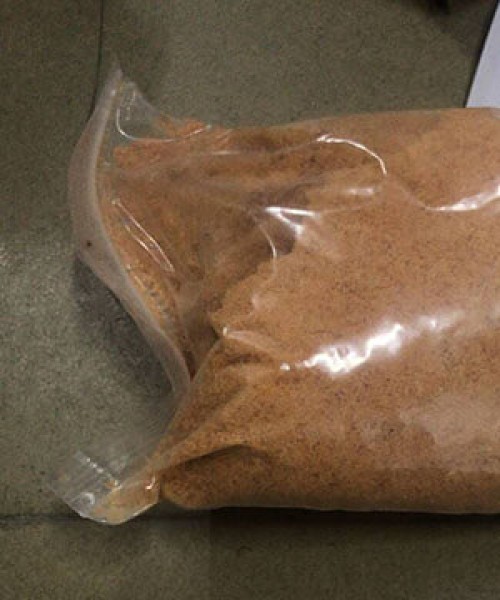
ADB-PINACA is a synthetic cannabinoid receptor agonist (SCRA) belonging to the indazole carboxamide family of Novel Psychoactive Substances (NPS). It is widely recognized in forensic toxicology, analytical chemistry, and pharmaceutical research due to its high affinity for cannabinoid receptors and its importance as an analytical reference standard.
Today, ADB-PINACA is primarily supplied to qualified laboratories for forensic identification, method validation, medicinal chemistry, and scientific research involving emerging synthetic cannabinoids.
What is ADB-PINACA?
ADB-PINACA is a laboratory-produced synthetic cannabinoid designed for scientific investigation of cannabinoid receptor interactions and analytical identification. It belongs to the indazole-based synthetic cannabinoid family and has become an important reference compound for forensic laboratories studying emerging psychoactive substances.
Its well-characterized molecular profile makes it valuable for analytical calibration, pharmaceutical investigations, and chemical characterization.
Chemical Structure and Properties
Key chemical characteristics include:
- Indazole-3-carboxamide backbone
- tert-Leucine (tert-butyl amino acid) derivative
- Pentyl side chain
- High-purity analytical reference material
- Stable under recommended laboratory storage conditions
Its molecular architecture is frequently studied in synthetic cannabinoid structure-activity relationship (SAR) research.
Scientific Research Applications
ADB-PINACA is commonly utilized in:
- Synthetic cannabinoid research
- Pharmaceutical development
- Medicinal chemistry
- Analytical chemistry
- Forensic toxicology
- Cannabinoid receptor studies
- Novel psychoactive substance investigations
- Structure-activity relationship (SAR) research
These studies contribute to improved analytical methods and forensic identification capabilities.
Analytical Applications
Professional laboratories frequently use ADB-PINACA for:
- Liquid Chromatography–Mass Spectrometry (LC-MS/MS)
- Gas Chromatography–Mass Spectrometry (GC-MS)
- High-Performance Liquid Chromatography (HPLC)
- High-Resolution Mass Spectrometry (HRMS)
- Reference standard calibration
- Method validation
- Chemical purity analysis
- Laboratory quality assurance
These analytical techniques enable reliable identification and characterization of synthetic cannabinoid compounds.
Why Researchers Study ADB-PINACA
Scientific interest includes:
- Cannabinoid receptor research
- Synthetic cannabinoid profiling
- Medicinal chemistry investigations
- Pharmaceutical compound evaluation
- Analytical method development
- Forensic laboratory validation
- Emerging NPS monitoring
- Reference standard development
Its well-documented analytical profile makes it valuable for laboratory research and method optimization.
Related Research Compounds
Researchers frequently compare ADB-PINACA with:
- AB-PINACA
- ADB-FUBINACA
- AB-FUBINACA
- ADB-BUTINACA
- 5F-ADB
- 5F-AB-PINACA
- 5F-ADB-PINACA
- APINACA (AKB48)
Comparative investigations help researchers understand structural diversity within synthetic cannabinoid families.
Research Applications
Potential laboratory applications include:
- Pharmaceutical Research
- Medicinal Chemistry
- Forensic Toxicology
- Analytical Chemistry
- Academic Research
- Cannabinoid Receptor Studies
- Chemical Characterization
- Reference Standard Development
Storage and Handling
For maximum laboratory stability:
- Store in airtight laboratory containers.
- Protect from moisture and direct sunlight.
- Maintain recommended laboratory storage temperatures.
- Handle using appropriate laboratory PPE.
- Follow institutional chemical safety protocols.
- Intended for qualified laboratory personnel only.
Frequently Asked Questions
What is ADB-PINACA?
ADB-PINACA is an indazole-based synthetic cannabinoid research chemical used as an analytical reference standard in forensic toxicology, pharmaceutical research, and analytical chemistry.
Which research fields commonly use ADB-PINACA?
It is widely used in forensic toxicology, analytical chemistry, medicinal chemistry, cannabinoid receptor research, pharmaceutical sciences, and emerging NPS investigations.
Which analytical techniques are suitable for ADB-PINACA?
Researchers commonly utilize LC-MS/MS, GC-MS, HPLC, and HRMS for identification, calibration, analytical validation, and chemical purity assessment.
Why is ADB-PINACA important for forensic laboratories?
Its well-established analytical profile makes it valuable for synthetic cannabinoid identification, method development, reference calibration, and forensic investigations.
Is ADB-PINACA intended only for laboratory research?
Yes. ADB-PINACA is supplied exclusively for scientific, laboratory, analytical, and educational research purposes.
Disclaimer
ADB-PINACA is intended exclusively for laboratory, analytical, scientific, and educational research. It is not intended for human consumption, medical treatment, veterinary use, therapeutic applications, or diagnostic purposes. Researchers are responsible for complying with all applicable laws, institutional regulations, and laboratory safety requirements.