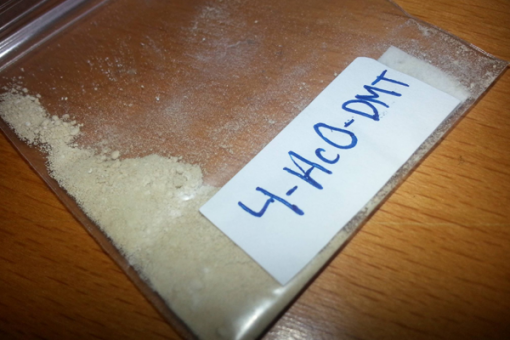
4-AcO-DMT (4-Acetoxy-N,N-Dimethyltryptamine), also known as Psilacetin or O-Acetylpsilocin, is a synthetic tryptamine derivative that has been referenced in scientific literature involving analytical chemistry, receptor-binding studies, metabolic research, and compound characterization. The compound is structurally related to psilocin and psilocybin and has attracted scientific interest due to its chemical properties and role in research involving tryptamine compounds.
Researchers may investigate 4-AcO-DMT to better understand its chemical structure, analytical characteristics, metabolic conversion pathways, and receptor interactions. Scientific literature frequently references the compound in studies involving tryptamine chemistry, serotonin receptor research, and comparative investigations of related compounds.
What Is 4-AcO-DMT?
4-AcO-DMT is a synthetic tryptamine compound structurally related to psilocin and psilocybin. Scientific literature describes it as an acetylated analogue of psilocin, making it an important reference compound in research involving substituted tryptamines and serotonin receptor interactions.
Researchers may encounter 4-AcO-DMT in studies involving analytical verification, metabolic characterization, receptor-binding investigations, and comparative tryptamine research.
Chemical Structure and Classification of 4-AcO-DMT
4-AcO-DMT belongs to the substituted tryptamine family and is chemically classified as an acetylated derivative of psilocin. Researchers frequently investigate compounds within this chemical class to better understand structural relationships, metabolic pathways, and analytical detection methods.
Its structural similarity to naturally occurring and synthetic tryptamines makes it relevant in comparative research and analytical investigations.
Metabolism and Scientific Interest
One of the most frequently studied aspects of 4-AcO-DMT is its metabolic relationship with psilocin. Scientific literature describes 4-AcO-DMT as a precursor compound that can undergo deacetylation to form psilocin under biological and laboratory conditions.
Researchers may investigate this metabolic conversion as part of broader studies involving tryptamine chemistry, analytical characterization, and compound metabolism.
Rezeptorbindung und analytische Forschung
Scientific investigations have referenced 4-AcO-DMT in studies involving serotonin receptor interactions and receptor-binding analysis. Researchers may evaluate measurable interactions involving serotonin receptor systems as part of laboratory-based research projects.
These investigations contribute to receptor-binding databases, analytical reference materials, and scientific understanding of substituted tryptamines.
Why Researchers Study 4-AcO-DMT
Researchers may reference 4-AcO-DMT in studies involving:
- Analytische Chemie
- Tryptamine research
- Stoffwechseluntersuchungen
- Identifizierung von Verbindungen
- Strukturelle Charakterisierung
- Rezeptorbindungsstudien
- vergleichende Verbindungsanalyse
- Wissenschaftliche Dokumentation
These studies help improve analytical methodologies and understanding of tryptamine chemistry.
Analytical Characterization of 4-AcO-DMT
Analytical laboratories may use various techniques to identify and characterize 4-AcO-DMT.
Zu den gängigen Analysemethoden gehören:
- Hochleistungsflüssigchromatographie (HPLC)
- Flüssigkeitschromatographie-Massenspektrometrie (LC-MS)
- Gaschromatographie-Massenspektrometrie (GC-MS)
- Spektroskopische Analyse
- Strukturelle Charakterisierungstechniken
- Verfahren zur Überprüfung von Verbindungen
Diese Methoden helfen Forschern, zuverlässige analytische Daten zu generieren und wissenschaftliche Untersuchungen zu unterstützen.
4-AcO-DMT in Tryptamine Research
Tryptamine compounds represent an important area of modern analytical and chemical research. Researchers studying 4-AcO-DMT may evaluate its structure and properties alongside other tryptamine derivatives to better understand compound classification, metabolism, and analytical behavior.
Such investigations contribute to broader scientific knowledge of substituted tryptamine chemistry.
Verwandte Verbindungen und Analoga
Researchers studying 4-AcO-DMT may also encounter:
- Psilocin (4-HO-DMT)
- Psilocybin (4-PO-DMT)
- DMT (N,N-Dimethyltryptamin)
- 4-HO-DMT
- Tryptamine Derivatives
- Substituted Indole Compounds
These compounds are frequently referenced in analytical, metabolic, and comparative investigations.
Research Applications of 4-AcO-DMT
Mögliche wissenschaftliche Interessensgebiete umfassen:
- Chemische Analyse
- Analytische Überprüfung
- Metabolic research
- Untersuchungen zur Rezeptorbindung
- Strukturelle Charakterisierung
- Bewertung von Referenzmaterialien
- Entwicklung von Labormethoden
- Vergleichende Verbindungsforschung
Hinweise zur Lagerung und Handhabung im Labor
Forschungssubstanzen sollten in einem kühlen, trockenen und dicht verschlossenen Behälter, geschützt vor direkter Sonneneinstrahlung, Feuchtigkeit und übermäßiger Hitze, gelagert werden. Geeignete Laborverfahren zur Probenhandhabung und Dokumentation tragen zur Wahrung der Probenintegrität und zu zuverlässigen Analyseergebnissen bei.
Alle Forschungsaktivitäten sollten in Übereinstimmung mit den geltenden Vorschriften, Laborprotokollen und institutionellen Anforderungen durchgeführt werden.
Häufig gestellte Fragen
What is 4-AcO-DMT?
4-AcO-DMT (4-Acetoxy-N,N-Dimethyltryptamine) is a synthetic tryptamine derivative and acetylated analogue of psilocin referenced in scientific and analytical research.
What are the alternative names of 4-AcO-DMT?
Alternative names include Psilacetin, O-Acetylpsilocin, Acetylpsilocin, 4-Acetoxy-DMT, and PSOA.
What is the molecular formula of 4-AcO-DMT?
The molecular formula of 4-AcO-DMT is C14H18N2O2.
What is the CAS number of 4-AcO-DMT?
The CAS number of 4-AcO-DMT is 92292-84-7.
What research fields study 4-AcO-DMT?
Research may involve analytical chemistry, tryptamine investigations, metabolic studies, receptor-binding research, and compound characterization.
Which analytical methods are commonly used to study 4-AcO-DMT?
Forscher können HPLC, LC-MS, GC-MS, Spektroskopie und andere analytische Techniken zur Identifizierung und Charakterisierung von Verbindungen einsetzen.
Why is 4-AcO-DMT important in scientific research?
It is referenced in scientific literature because of its structural relationship to psilocin and psilocybin, as well as its relevance to metabolic and analytical investigations.
What compounds are related to 4-AcO-DMT?
Related compounds include Psilocin, Psilocybin, DMT, 4-HO-DMT, and other substituted tryptamine derivatives.
Haftungsausschluss für Bildung und Forschung
This page is provided for educational, scientific, and informational purposes only. Information regarding 4-AcO-DMT is intended to support academic discussion, scientific understanding, and research reference activities. Any research involving this compound should be conducted by qualified professionals in accordance with applicable laws, regulations, institutional policies, and laboratory safety standards.

 English
 Español
 Français
 Português
 Deutsch