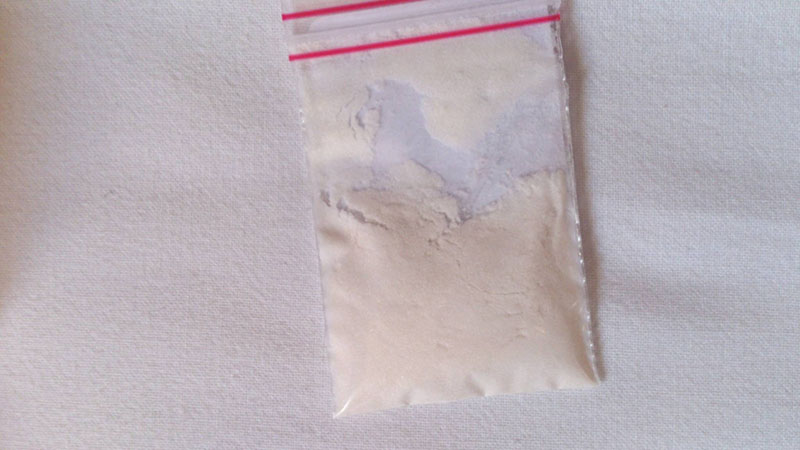
4C-D, also known as Ariadne or Dimoxamine, is a synthetic phenethylamine and amphetamine derivative first described by Alexander Shulgin in PiHKAL (Phenethylamines I Have Known and Loved). Structurally related to compounds such as DOM and 2C-D, 4C-D occupies a unique position among phenethylamine research chemicals due to its distinct pharmacological profile and scientific significance.
Researchers have shown interest in 4C-D because it exhibits interaction with serotonin receptor systems while lacking the strong hallucinogenic properties commonly associated with related compounds. This makes it a valuable subject for analytical chemistry, receptor-binding studies, structure-activity relationship research, and pharmacological investigations.
What is 4C-D?
4C-D is a member of the 4C family of substituted phenethylamines. It is structurally related to DOM but contains an extended carbon chain that significantly alters its pharmacological behavior.
Scientific literature often highlights 4C-D due to its ability to interact with serotonin receptor systems while producing a substantially different activity profile compared to classical psychedelic phenethylamines. This distinctive characteristic has made it an interesting compound for receptor efficacy and pharmacological research.
Estructura química y clasificación.
4C-D belongs to the substituted phenethylamine family and can be viewed as:
- An α-ethyl homologue of 2C-D
- A structural analogue of DOM
- A member of the 4C series of phenethylamine compounds
Its molecular architecture provides valuable insights into how subtle structural modifications influence receptor activity and biological response.
Pharmacological Research Interest
Research involving 4C-D commonly focuses on:
- Interacciones del receptor de serotonina
- 5-HT2A receptor studies
- Receptor efficacy analysis
- Investigaciones de la relación estructura-actividad
- Phenethylamine pharmacology
- Comparative receptor-binding research
Studies suggest that 4C-D interacts with serotonin receptor systems but exhibits lower intrinsic efficacy than many related phenethylamine compounds.
Why Researchers Study 4C-D
4C-D remains relevant in scientific research due to its unique profile among substituted phenethylamines.
Areas of interest include:
- Receptor activation studies
- Caracterización analítica
- Investigación en neurofarmacología
- Investigaciones de química medicinal
- Comparative phenethylamine studies
- Structure-function relationship analysis
Its distinct pharmacological behavior provides useful data for understanding receptor selectivity and compound design.
Analytical and Laboratory Applications
4C-D may be utilized in laboratory settings for:
- Desarrollo de estándares de referencia
- Analytical method validation
- Chromatographic studies
- Análisis espectroscópico
- Identificación compuesta
- Research database cataloging
Laboratories frequently employ advanced analytical techniques to characterize and verify compound identity and purity.
Scientific Significance
The scientific value of 4C-D lies in its unusual relationship between chemical structure and pharmacological activity.
Researchers continue to examine:
- Phenethylamine receptor interactions
- Structural modifications and biological effects
- Medicinal chemistry applications
- Experimental pharmacology
- Investigación sobre nuevas sustancias psicoactivas
These studies contribute to a broader understanding of substituted phenethylamine chemistry.
La Investigación Relacionada Con Los Compuestos
Researchers interested in 4C-D often explore related compounds including:
- 2C-D
- DOM
- 3C-P
- Proscaline
- Mescaline Analogues
- Other Substituted Phenethylamines
Comparative analysis helps establish relationships between chemical structure and pharmacological activity.
Research Applications
Potential laboratory applications include:
- Pharmacological investigations
- Receptor-binding analysis
- química analítica
- Estudios de relaciones estructura-actividad.
- Desarrollo de material de referencia.
- Scientific compound characterization
Almacenamiento y manipulación de laboratorio
Para una estabilidad óptima:
- Store in a sealed container
- Protect from excessive heat and moisture
- Avoid direct sunlight exposure
- Follow standard laboratory handling procedures
- Utilice el equipo de protección adecuado durante la manipulación.
Preguntas frecuentes
What is 4C-D?
4C-D, also known as Ariadne or Dimoxamine, is a substituted phenethylamine research compound first described by Alexander Shulgin.
What family does 4C-D belong to?
It belongs to the phenethylamine and amphetamine chemical families.
What is the molecular formula of 4C-D?
La fórmula molecular es C13H21NO2.
Why is 4C-D important in research?
Researchers study 4C-D because of its unique receptor interaction profile and its value in structure-activity relationship investigations.
Is 4C-D related to DOM?
Yes. 4C-D is structurally related to DOM and is considered a member of the broader substituted phenethylamine family.
What research areas use 4C-D?
4C-D is commonly referenced in pharmacological research, receptor studies, analytical chemistry, and compound characterization.
How should 4C-D be stored?
Store it in a cool, dry, sealed container away from moisture, heat, and direct sunlight.
 English
 Español
 Français
 Português
 Deutsch