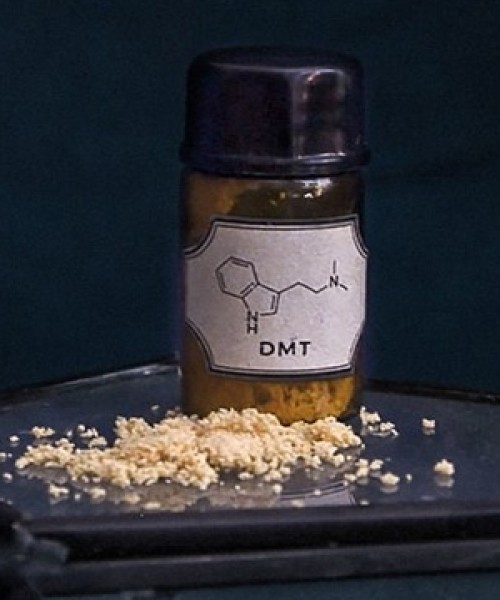
DMT (N,N-Dimethyltryptamine) is a naturally occurring and synthetic tryptamine compound widely studied in neuroscience, analytical chemistry, pharmacology, and psychedelic research. It serves as an important analytical reference standard for laboratories investigating serotonin receptor pharmacology, neurochemistry, metabolism, forensic toxicology, and emerging psychoactive substances.
DMT is naturally present in numerous plant species and has also been identified in trace amounts in certain mammals. In modern scientific settings, it is primarily used for laboratory, analytical, and research purposes.
DMT is supplied exclusively for laboratory research and analytical applications and is not approved for medical or therapeutic use.
What is DMT?
DMT (N,N-Dimethyltryptamine) is a member of the tryptamine family, sharing structural similarities with naturally occurring neurotransmitters such as serotonin. Due to its unique molecular structure and receptor interactions, DMT has become an important compound for research into neuropharmacology, receptor signaling, metabolism, and analytical detection.
Researchers use DMT as a reference material for studying serotonin receptor activity, analytical method validation, and the chemistry of naturally occurring and synthetic tryptamines.
Chemische Struktur und Eigenschaften
DMT possesses several characteristics that make it valuable for laboratory investigations:
- Tryptamine-based molecular scaffold
- Structural similarity to serotonin
- High analytical stability under appropriate storage conditions
- Suitable for chromatographic and mass spectrometric analysis
- Well-characterized molecular profile for analytical reference work
Its physicochemical properties support reproducible identification using modern analytical instrumentation.
Wissenschaftliche Forschung Anwendungen
DMT is widely utilized in:
- Neuroscience laboratories
- Pharmacology research
- Medizinische Chemie
- Forensische Toxikologie
- Neuroreceptor studies
- Forschung zu Drogenstoffwechsel
- Academic research institutions
- Analytische Chemie Laboratorien
- Pharmazeutische Forschung
Analytische Anwendungen
Professional laboratories employ DMT for:
- LC-MS/MS-Kalibrierung
- GC-MS Identifizierung
- LC-HRMS-Analyse
- HPLC-Methodenentwicklung
- Validierung analytischer Methoden
- Erstellung von Referenzbibliotheken
- Qualitätskontrolle
- Forensische Toxikologie-Screening
- Metabolite identification studies
Its consistent analytical profile makes it a valuable reference standard in research laboratories.
Pharmakologie-Forschung
Researchers investigate DMT to better understand:
- Serotonin receptor interactions
- Neurotransmitter signaling pathways
- Tryptamine chemistry
- Receptor binding characteristics
- Molecular pharmacology
- Drug metabolism
- Struktur-Aktivitäts-Beziehung (SAR)-Studien
- Neurochemical mechanisms
These studies contribute to advances in neuroscience and medicinal chemistry.
Why Researchers Choose DMT
Researchers value DMT because it offers:
- Hohe analytische Reinheit
- Well-documented chemical structure
- Reliable chromatographic performance
- Excellent mass spectrometric characteristics
- Broad use across neuroscience and analytical chemistry
- Reproducible laboratory results
- Established role as a reference standard
Verwandte Forschungs-Verbindungen
Researchers frequently compare DMT with related compounds including:
- 5-MeO-DMT
- 5-Br-DMT
- Psilocin (4-HO-DMT)
- Psilocybin
- 4-AcO-DMT
- MET
- DET
- DiPT
- MiPT
- Other substituted tryptamines
Comparative studies support analytical identification, receptor pharmacology, and metabolism research.
Lagerung und Handhabung
Für eine optimale Labor-Stabilität:
- Speichern Sie in luftdichten Labor-Container.
- Keep away from humidity and excessive heat.
- Vor direkter Sonneneinstrahlung schützen.
- Follow institutional laboratory handling procedures.
- Verwenden Sie die geeignete persönliche Schutzausrüstung (PSA) im Labor.
Häufig Gestellte Fragen
What is DMT?
DMT is a substituted tryptamine used as an analytical reference standard in neuroscience, pharmacology, forensic toxicology, and analytical chemistry.
Which laboratories use DMT?
DMT is commonly used by neuroscience laboratories, forensic laboratories, pharmaceutical researchers, analytical chemists, and academic institutions.
Die analytischen Techniken werden Häufig verwendet?
Researchers typically analyze DMT using LC-MS/MS, GC-MS, LC-HRMS, HPLC, and other advanced analytical techniques.
Why is DMT valuable in research?
Its well-characterized molecular structure, reproducible analytical profile, and importance in serotonin receptor research make it a valuable laboratory reference compound.
Is DMT intended only for research?
Ja. Dieses Produkt wird ausschließlich für Labor-, Analyse-, Wissenschafts- und Bildungszwecke geliefert.
Haftungsausschluss
DMT (N,N-Dimethyltryptamine) wird geliefert Nur für Labor-, Analyse-, Wissenschafts- und Bildungszwecke. es ist Nicht für den menschlichen Verzehr, die medizinische Behandlung, den tierärztlichen Gebrauch, therapeutische Anwendungen oder diagnostische Zwecke bestimmt. Die Benutzer sind für die Einhaltung aller geltenden Gesetze, institutionellen Richtlinien und Sicherheitsbestimmungen für das Labor verantwortlich.


 English
 Spanish
 French
 Portuguese
 German
 Russian