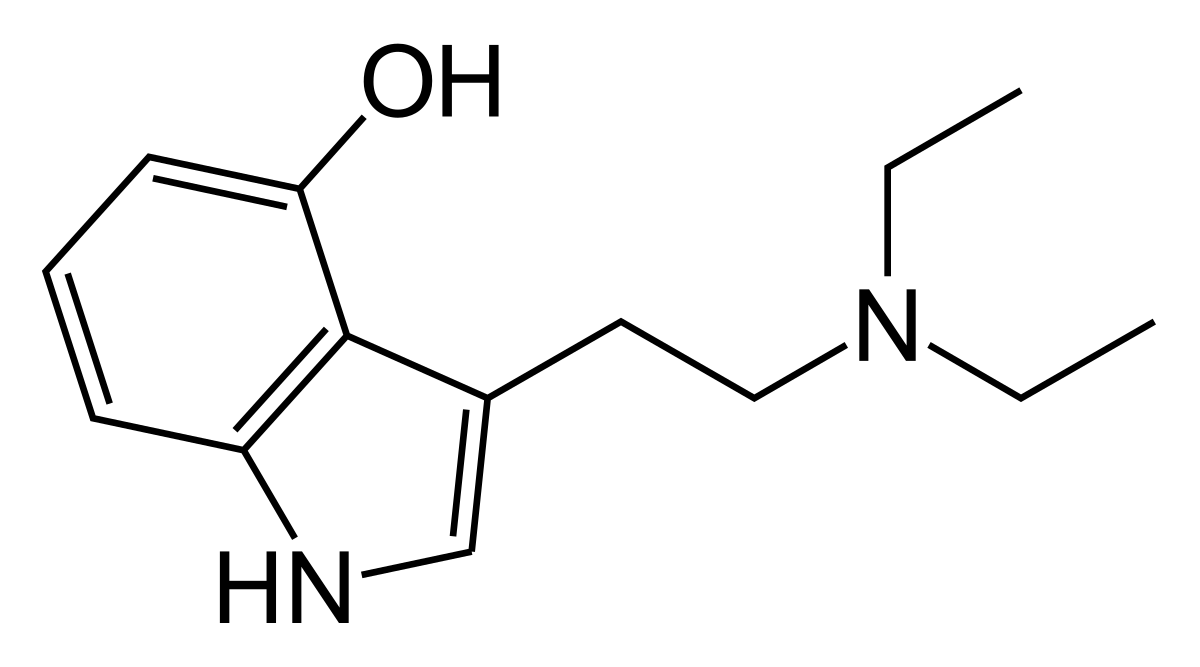
4-HO-DET (4-Hydroxy-N,N-Diethyltryptamine), also known as Ethocin, is a substituted tryptamine research compound belonging to the 4-hydroxytryptamine family. Structurally related to psilocin (4-HO-DMT), DET, and other psychedelic tryptamines, 4-HO-DET has been studied in analytical chemistry, receptor pharmacology, neurochemical research, and compound characterization investigations.
Researchers investigate 4-HO-DET for its chemical structure, receptor binding profile, analytical properties, and structure-activity relationships among substituted tryptamines. The compound has historical significance in scientific literature dating back to the 1960s and remains relevant in modern analytical and pharmacological research.
What Is 4-HO-DET?
4-HO-DET is a 4-hydroxylated tryptamine derivative and the N,N-diethyl analogue of psilocin (4-HO-DMT). It belongs to the broader family of substituted tryptamines that are frequently referenced in receptor research, neurochemical investigations, and analytical chemistry.
Researchers may study 4-HO-DET to better understand its receptor interactions, molecular properties, analytical behavior, and structural relationships with related tryptamine compounds.
Estructura química y clasificación.
4-HO-DET belongs to the substituted tryptamine family and contains several defining structural features:
- Tryptamine molecular backbone
- Hydroxyl substitution at the 4-position
- N,N-Diethyl substitution
- Indole-based structure
These characteristics place the compound among several well-known tryptamine analogues used in scientific research.
Investigación farmacológica y de la unión a receptores
Published studies have reported that 4-HO-DET interacts with multiple serotonin receptor systems.
Research has identified measurable affinity for:
- 5-HT2A Receptors
- 5-HT2B Receptors
- 5-HT2C Receptors
- 5-HT1A Receptors
- Additional serotonin receptor subtypes
Scientific investigations suggest that 4-HO-DET functions as a non-selective serotonin receptor agonist and is commonly referenced in receptor pharmacology research.
Scientific Significance of 4-HO-DET Research
Scientific interest in 4-HO-DET stems from its relevance to:
- Tryptamine research
- Farmacología de los receptores
- Investigaciones neuroquímicas
- química analítica
- Estudios de relaciones estructura-actividad.
- Caracterización compuesta
Research involving 4-HO-DET contributes to scientific understanding of serotonin receptor interactions and substituted tryptamine chemistry.
Why Researchers Study 4-HO-DET
Researchers may reference 4-HO-DET in studies involving:
- Serotonin receptor research
- Investigaciones neuroquímicas
- química analítica
- Tryptamine characterization
- Receptor binding analysis
- Pruebas de laboratorio
- Documentación científica
- Investigación farmacológica comparativa
These investigations contribute to improved understanding of receptor activity and molecular structure relationships.
Analytical Characterization of 4-HO-DET
Analytical laboratories may use multiple techniques to identify and characterize 4-HO-DET.
Los métodos analíticos comunes incluyen:
- Cromatografía líquida de alto rendimiento (HPLC)
- Cromatografía líquida-espectrometría de masas (LC-MS)
- Cromatografía de gases-espectrometría de masas (GC-MS)
- Análisis espectroscópico
- Receptor Binding Assays
- Procedimientos de verificación compuestos
These methods help generate reliable analytical data for scientific investigations.
Compuestos relacionados y análogos
Researchers studying 4-HO-DET may also encounter:
- Psilocina (4-HO-DMT)
- Diethyltryptamine (DET)
- 4-HO-MET
- 4-HO-DPT
- 4-HO-EPT
- 5-MeO-DET
- 4-AcO-DET
- Ethocybin (4-PO-DET)
These compounds are frequently referenced in comparative tryptamine research and structure-activity investigations.
Historical Research Background
4-HO-DET was first described in scientific literature during the early 1960s and was developed by researchers at Sandoz. The compound later appeared in scientific investigations involving tryptamine chemistry and receptor pharmacology.
Its documented history makes it a notable compound within the broader field of substituted tryptamine research.
Research Applications of 4-HO-DET
Las posibles aplicaciones científicas incluyen:
- Estudios de unión a receptores
- Investigaciones neuroquímicas
- Verificación analítica
- Caracterización estructural
- Comparative tryptamine research
- Desarrollo de métodos de laboratorio.
- Evaluación estándar de referencia
- Documentación científica
Almacenamiento y manipulación de laboratorio
Research compounds should be stored under appropriate laboratory conditions to preserve analytical integrity and maintain sample stability. Proper storage helps ensure reliable research outcomes and consistent analytical performance.
All handling and research activities should be conducted by qualified professionals following laboratory safety standards and applicable regulations.
Preguntas frecuentes
What is 4-HO-DET?
4-HO-DET (4-Hydroxy-N,N-Diethyltryptamine) is a substituted tryptamine research compound commonly referenced in analytical chemistry, receptor pharmacology, and neurochemical investigations.
What is the molecular formula of 4-HO-DET?
The molecular formula of 4-HO-DET is C14H20N2O.
What is the molecular weight of 4-HO-DET?
The molecular weight of 4-HO-DET is 232.327 g/mol.
What chemical family does 4-HO-DET belong to?
4-HO-DET belongs to the substituted tryptamine and 4-hydroxytryptamine families.
Which receptors are commonly studied with 4-HO-DET?
Research commonly focuses on serotonin receptor systems including 5-HT2A, 5-HT2B, 5-HT2C, and 5-HT1A receptors.
What compounds are structurally related to 4-HO-DET?
Related compounds include psilocin (4-HO-DMT), DET, 4-HO-MET, 4-HO-DPT, 4-HO-EPT, and 4-AcO-DET.
What analytical methods are used to study 4-HO-DET?
Researchers commonly use HPLC, LC-MS, GC-MS, spectroscopy, receptor binding assays, and compound verification techniques.
Why is 4-HO-DET important in scientific research?
It is referenced because of its relevance to receptor pharmacology, tryptamine chemistry, neurochemical investigations, and structure-activity relationship research.
Descargo de responsabilidad sobre educación y investigación
Este producto está destinado estrictamente a fines científicos, educativos y de investigación de laboratorio. No está destinado al consumo humano, uso médico, uso veterinario ni aplicaciones terapéuticas. Todo el manejo y la investigación deben ser realizados por profesionales calificados de acuerdo con las leyes, regulaciones y estándares de seguridad de laboratorio aplicables.


 English
 Español
 Français
 Português
 Deutsch