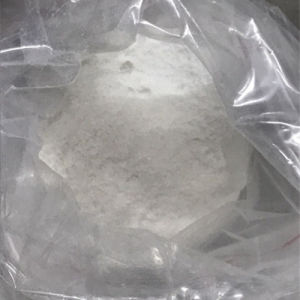
RTI-111, also known as Dichloropane, is a synthetic phenyltropane research compound originally developed for investigations into monoamine transporter pharmacology. Due to its well-characterized molecular structure and activity at dopamine, norepinephrine, and serotonin transporters, RTI-111 has become an important analytical reference standard in medicinal chemistry, neuropharmacology, forensic toxicology, and analytical laboratories.
Its unique structural characteristics and relevance in neurotransmitter transporter research make RTI-111 valuable for analytical method development, structure–activity relationship (SAR) studies, drug metabolism investigations, and pharmaceutical research.
RTI-111 is supplied strictly for laboratory, analytical, and scientific research purposes only. It is not approved for human or veterinary use.
What is RTI-111 (Dichloropane)?
RTI-111 is a synthetic phenyltropane derivative belonging to the monoamine transporter inhibitor class. It is structurally related to cocaine analogs but was developed primarily as a research compound for studying dopamine, norepinephrine, and serotonin transporter interactions.
Research laboratories utilize RTI-111 as a certified analytical reference material to support transporter research, analytical method validation, forensic screening, metabolite identification, and structure–activity relationship (SAR) investigations.
La Structure chimique et les Propriétés
RTI-111 possesses several analytical characteristics valuable for laboratory research:
- Phenyltropane core structure
- Dichlorophenyl substituted molecular framework
- Haute d'analyse de la stabilité
- Comportement chromatographique bien défini
- Excellente compatibilité avec les instruments LC-MS/MS et GC-MS
- Adapté pour l'analyse de référence de la bibliothèque de développement
- Fiable d'identification médico-légale marqueur
Ces caractéristiques permettent des analyses de laboratoire reproductibles et une identification analytique de haute fiabilité.
Les Applications Scientifiques
RTI-111 is widely employed in:
- Chimie analytique
- La chimie médicinale
- Recherche en neuropharmacologie
- Le métabolisme des médicaments enquêtes
- Toxicologie médico-légale
- Le dépistage toxicologique
- Pharmaceutique de la recherche analytique
- La recherche universitaire
- Recherche sur les transporteurs de monoamines
- Études de relation structure-activité (SAR)
Applications Analytiques De
Professional laboratories commonly use RTI-111 for:
- LC-MS/MS en étalonnage
- GC-MS pour l'identification
- LC-HRMS analyse
- Validation de la méthode HPLC
- Méthode d'analyse de développement
- Médico-légale de dépistage de drogues
- Le contrôle de la qualité
- Métabolite de profilage
- Toxicologiques de référence de la création de la bibliothèque
L'homogénéité de ses performances analytiques rend précieux pour la médecine légale et des laboratoires pharmaceutiques.
De Recherche En Pharmacologie
Researchers investigate RTI-111 in studies involving:
- Recherche sur les transporteurs de dopamine (DAT)
- Recherche sur le transporteur de noradrénaline (NET)
- Serotonin transporter (SERT) research
- Monoamine transporter characterization
- Relation Structure–activité (SAR) analyse
- Le métabolisme des médicaments et de la biotransformation
- La chimie médicinale
- Toxicologie analytique
Ces investigations contribuent aux progrès de la recherche en sciences analytiques et pharmaceutiques.
Why Researchers Choose RTI-111
Researchers select RTI-111 because it provides:
- Haute pureté analytique
- Bien caractérisé la structure moléculaire
- Stable comportement chromatographique
- Excellent par spectrométrie de masse de réponse
- Significant pharmacological research value
- Analyse fiable de référence
- Broad applicability in neuroscience and toxicology laboratories
Recherche Liée À Des Composés
Researchers frequently compare RTI-111 with related compounds including:
- Cocaïne
- Tesofensine
- Brasofensine
- NS-2359
- 3,4-DCMP
- O-2390
- RTI-31
- RTI-55
- WIN 35,428
- Methylecgonidine
Comparative studies support analytical identification, transporter research, metabolism studies, and structure–activity relationship investigations.
De stockage et de Manutention
Pour optimiser le laboratoire de la stabilité:
- Magasin étanche à l'air dans les récipients de laboratoire.
- Protéger de la chaleur, de l'humidité et de la lumière directe du soleil.
- Maintenir le stockage dans un endroit frais, sec et à l'environnement.
- Poignée à l'aide de laboratoire approprié équipement de protection individuelle (EPI).
- Suivez laboratoire institutionnel procédures de sécurité.
Foire aux questions
What is RTI-111?
RTI-111 (Dichloropane) is a synthetic phenyltropane research compound used as an analytical reference standard in neuropharmacology, forensic toxicology, medicinal chemistry, and analytical chemistry.
Which laboratories use RTI-111?
It is commonly used by forensic laboratories, toxicology laboratories, neuroscience researchers, pharmaceutical researchers, academic institutions, and analytical chemistry laboratories.
Qui techniques d'analyse sont couramment utilisés?
Researchers commonly analyze RTI-111 using LC-MS/MS, GC-MS, LC-HRMS, HPLC, and related analytical techniques.
Why is RTI-111 valuable in research?
Its well-characterized molecular profile, transporter research significance, analytical stability, and forensic relevance make it valuable for method validation, metabolite identification, transporter studies, and analytical reference development.
Is RTI-111 intended only for research?
Yes. RTI-111 is supplied exclusively for laboratory, analytical, scientific, and educational research purposes.
Avertissement
RTI-111 is supplied strictly for laboratory, analytical, scientific, and educational research purposes only. It is not intended for human consumption, medical treatment, veterinary applications, therapeutic use, or diagnostic procedures. Users are responsible for complying with all applicable local laws, institutional policies, and laboratory safety regulations.

 English
 Español
 Français
 Português
 Deutsch