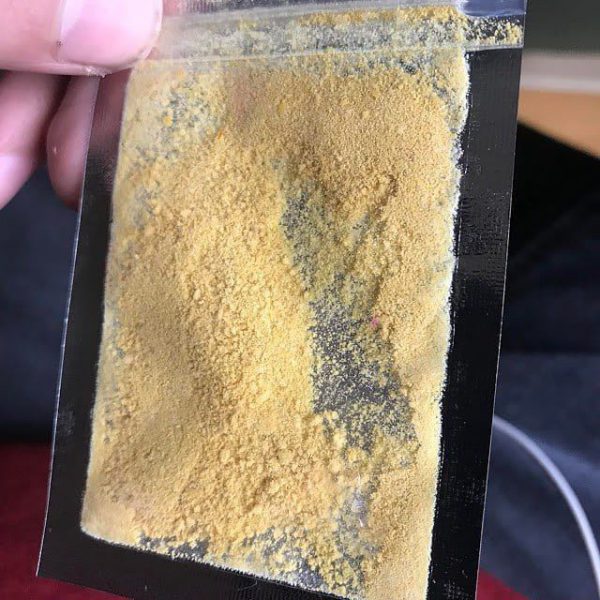
5-Br-DMT (5-Bromo-N,N-Dimethyltryptamine) is a naturally occurring halogenated tryptamine and analytical reference standard used in neuropharmacology, medicinal chemistry, marine natural products research, and analytical toxicology. It is structurally related to N,N-Dimethyltryptamine (DMT), differing by the presence of a bromine atom at the 5-position of the indole ring.
Originally isolated from several marine sponge species, 5-Br-DMT has attracted scientific interest for studies involving serotonin receptor pharmacology, psychoplastogenic mechanisms, marine alkaloid chemistry, and structure–activity relationship (SAR) research. It is supplied exclusively for qualified laboratory research and analytical applications.
What is 5-Br-DMT?
5-Br-DMT is a brominated derivative of DMT belonging to the substituted tryptamine family. Unlike many synthetic analogues, it has also been identified as a naturally occurring marine alkaloid in several sponge species.
Because of its unique molecular structure and receptor binding profile, researchers use 5-Br-DMT to investigate:
- Farmacologia do receptor de serotonina
- Halogenated tryptamine chemistry
- Marine alkaloid biosynthesis
- Neuroplasticity research
- Química Medicinal otimização
- Comparative psychedelic analogue studies
Its naturally occurring origin and well-characterized chemical identity make it valuable for analytical and pharmacological investigations.
Estrutura química e Propriedades
5-Br-DMT possesses several distinguishing structural characteristics:
- Núcleo indol
- N,N-dimethylamine side chain
- Bromine substitution at the 5-position
- Halogenated tryptamine scaffold
- Elevada estabilidade analítica
The bromine substitution influences receptor interactions and provides a useful model for studying halogen substitution effects within the tryptamine family.
Investigação Farmacológica
Experimental investigations indicate that 5-Br-DMT interacts primarily with serotonergic signaling systems.
Current research explores:
- Serotonin receptor binding
- 5-HT₂A receptor pharmacology
- 5-HT₁A receptor interaction
- Psychoplastogenic mechanisms
- Molecular signaling pathways
- Receptor selectivity
- Comparative activity among halogenated tryptamines
Because its pharmacological profile differs from several closely related compounds, it continues to be investigated for fundamental receptor biology and medicinal chemistry research.
A Investigação Científica Aplicações
5-Br-DMT is commonly utilized in:
- Laboratórios de neurociência
- Química Medicinal programas
- Marine natural products research
- farmacologia acadêmica
- Receptor biology studies
- Química analítica laboratórios
- Pharmaceutical discovery research
- Toxicology investigations
- Desenvolvimento de padrões de referência química
Aplicações Analíticas
Professional laboratories use 5-Br-DMT for:
- LC-MS/MS de calibração
- Identificação por GC-MS
- Análise por HPLC
- Espectrometria de massas de alta resolução (HRMS)
- Validação do método
- Analytical reference libraries
- Testes de controlo de qualidade
- Identificação forense de compostos
Its defined molecular profile allows reliable analytical differentiation from other substituted tryptamines.
Marine Natural Product Research
Unlike many research chemicals, 5-Br-DMT has been isolated from marine organisms, including several sponge species.
This has generated scientific interest in:
- Marine alkaloid biosynthesis
- Química dos produtos naturais
- Marine metabolomics
- Brominated indole derivatives
- Secondary metabolite discovery
- Chemical ecology
Marine-derived compounds continue to provide valuable molecular templates for pharmaceutical and biochemical research.
Why Researchers Choose 5-Br-DMT
Researchers select 5-Br-DMT because it provides:
- Naturally occurring molecular scaffold
- Well-defined analytical profile
- Alta pureza química
- Modelo de farmacologia de receptores valiosos
- Important SAR comparison compound
- Reliable analytical reference material
- Broad applicability across multiple research disciplines
A Investigação Relacionada Com Compostos
Researchers frequently compare 5-Br-DMT with:
- DMT
- 5-Fluoro-DMT
- 5-Chloro-DMT
- 5,6-Dibromo-DMT
- 5-HO-DMT
- 5-MeO-DMT
- DET
- MET
- Outras triptaminas substituídas
Comparative investigations improve understanding of receptor affinity, molecular modifications, and analytical identification.
Armazenamento e Manipulação
Para máxima estabilidade laboratorial:
- Loja em hermético recipientes de laboratório.
- Conservar em local fresco e seco.
- Protect from moisture.
- Evite a exposição prolongada à luz.
- Identificador usando laboratório adequado de EPI.
- Siga institucionais laboratório de procedimentos de segurança.
Perguntas frequentes
What is 5-Br-DMT?
5-Br-DMT is a halogenated tryptamine analytical reference standard used in neuropharmacology, medicinal chemistry, marine natural products research, forensic toxicology, and analytical chemistry.
Is 5-Br-DMT naturally occurring?
Yes. It has been identified as a naturally occurring brominated indole alkaloid in several marine sponge species, making it of particular interest in marine natural products research.
Which laboratories use 5-Br-DMT?
It is commonly used by neuroscience laboratories, pharmaceutical researchers, medicinal chemists, forensic toxicologists, analytical chemistry laboratories, and academic research institutions.
Which analytical techniques are used with 5-Br-DMT?
Researchers commonly analyze 5-Br-DMT using LC-MS/MS, GC-MS, HPLC, and HRMS for compound identification, method development, and analytical validation.
Is this product intended only for research?
Yes. 5-Br-DMT is supplied exclusively for laboratory, analytical, scientific, and educational research purposes.
Isenção de responsabilidade
5-Br-DMT (5-Bromo-N,N-Dimethyltryptamine) é fornecido Exclusivamente para investigação laboratorial, analítica, científica e educacional.. É not intended for human consumption, medical use, veterinary applications, therapeutic purposes, or diagnostic procedures. Os pesquisadores são responsáveis por cumprir todas as leis aplicáveis, políticas institucionais e regulamentos de segurança laboratorial.