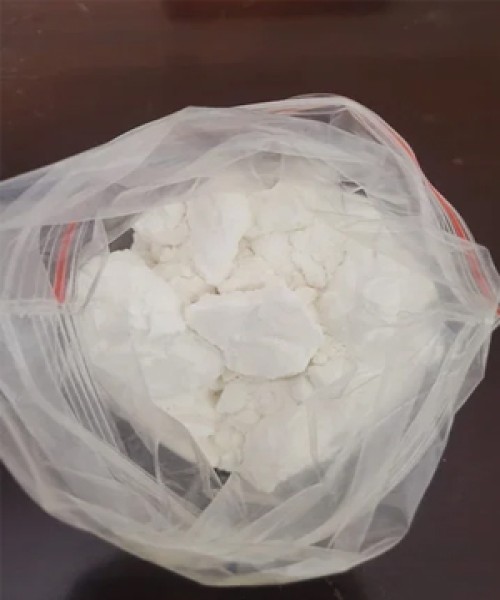
4-CPrC (4-Chloro-α-Pyrrolidinopropiophenone) is a synthetic cathinone derivative belonging to the broader class of novel psychoactive substances (NPS). Structurally related to other halogenated cathinones such as 4-CMC (Clephedrone), the compound has attracted scientific interest in analytical chemistry, forensic toxicology, metabolic investigations, and synthetic cathinone research.
Researchers may investigate 4-CPrC to better understand its chemical structure, analytical properties, metabolic pathways, and classification within the synthetic cathinone family. Scientific literature primarily references the compound in laboratory-based investigations involving identification, characterization, and metabolite profiling.
What Is 4-CPrC?
4-CPrC is a chlorinated synthetic cathinone derivative that belongs to the pyrrolidinophenone family of compounds. Researchers may encounter this compound in analytical investigations involving synthetic cathinones, forensic sample identification, and comparative chemical studies.
Scientific literature has discussed 4-CPrC primarily in relation to metabolic characterization, analytical detection, and structural comparison with other halogenated cathinones.
Estrutura química e classificação
4-CPrC belongs to the synthetic cathinone family and contains a para-chloro substituted phenyl ring combined with a pyrrolidine group. This structural framework places it within a class of compounds commonly investigated in forensic and analytical laboratories.
Understanding the molecular structure of 4-CPrC assists researchers in compound classification, metabolite identification, and analytical verification.
Scientific Significance of 4-CPrC Research
Scientific interest in 4-CPrC stems from its relevance to:
- Pesquisa de catinona sintética
- química analítica
- Perfil metabólico
- investigações forenses
- caracterização estrutural
- Desenvolvimento de padrão de referência
Research involving 4-CPrC contributes to scientific databases and analytical methodologies used for emerging compound identification.
Metabolism and Analytical Research
Published laboratory investigations indicate that 4-CPrC undergoes Phase I metabolic transformation and can produce multiple metabolites in human hepatocyte studies.
Researchers may investigate:
- Metabolic pathways
- Metabolite identification
- Compound stability
- Analytical markers
- Laboratory detection methods
These investigations help improve forensic identification and analytical reference databases.
Why Researchers Study 4-CPrC
Researchers may reference 4-CPrC in studies involving:
- química analítica
- Investigações sintéticas de cathinone
- Perfil metabólico
- Identificação do composto
- caracterização estrutural
- toxicologia forense
- exames laboratoriais
- documentação científica
Essas investigações ajudam a melhorar as metodologias analíticas e os sistemas de classificação de compostos.
Analytical Characterization of 4-CPrC
Analytical laboratories may use various techniques to identify and characterize 4-CPrC.
Os métodos analíticos comuns incluem:
- Cromatografia líquida de alto desempenho (HPLC)
- Cromatografia líquida-espectrometria de massa (LC-MS)
- Cromatografia gasosa-espectrometria de massa (GC-MS)
- Análise espectroscópica
- Metabolite Profiling
- Procedimentos de verificação compostos
These methods help researchers generate reliable analytical data and support scientific investigations.
Compostos e análogos relacionados
Researchers studying 4-CPrC may also encounter:
- 4-CMC (Clephedrone)
- 3-CMC
- 4-CDC
- α-PVP
- Pyrrolidinophenone Derivatives
- Cathinones sintéticas
- Halogenated Cathinones
These compounds are frequently referenced in analytical and comparative research investigations.
Research Applications of 4-CPrC
As áreas potenciais de interesse científico incluem:
- análise química
- Metabolite identification
- Verificação analítica
- caracterização estrutural
- investigações forenses
- Avaliação padrão de referência
- Desenvolvimento de métodos laboratoriais
- Pesquisa Comparada Comparativa
Armazenamento e manuseio do laboratório
Research compounds should be stored in a cool, dry, and properly sealed container away from moisture, direct sunlight, and excessive heat. Appropriate laboratory handling procedures and documentation practices help maintain sample integrity and support reliable analytical outcomes.
All research activities should be conducted by qualified professionals in accordance with applicable regulations and laboratory protocols.
Perguntas Frequentes
What is 4-CPrC?
4-CPrC (4-Chloro-α-Pyrrolidinopropiophenone) is a synthetic cathinone derivative referenced in analytical chemistry, forensic toxicology, and scientific research.
What is the CAS number of 4-CPrC?
The CAS number of 4-CPrC is 8272321-02-2.
What is the molecular formula of 4-CPrC?
The molecular formula of 4-CPrC is C15H20ClNO.
What research fields study 4-CPrC?
Research may involve analytical chemistry, metabolite profiling, forensic investigations, compound characterization, and synthetic cathinone studies.
Which analytical methods are used to study 4-CPrC?
Researchers commonly use HPLC, LC-MS, GC-MS, spectroscopy, and metabolite analysis techniques.
Why is 4-CPrC important in scientific research?
It is referenced in scientific literature because of its relevance to synthetic cathinone research, metabolic studies, analytical characterization, and forensic investigations.
What compounds are related to 4-CPrC?
Related compounds include 4-CMC, 3-CMC, α-PVP, pyrrolidinophenone derivatives, and other synthetic cathinones.
Isenção de responsabilidade educacional e de pesquisa
Este produto destina-se estritamente a propósitos científicos, educacionais e de laboratório. Não se destina a consumo humano, uso médico, uso veterinário ou aplicações terapêuticas. Todo o manuseio e pesquisa devem ser realizados por profissionais qualificados de acordo com as leis, regulamentos e padrões de segurança laboratoriais aplicáveis.

 English
 Spanish
 French
 Portuguese
 German
 Russian