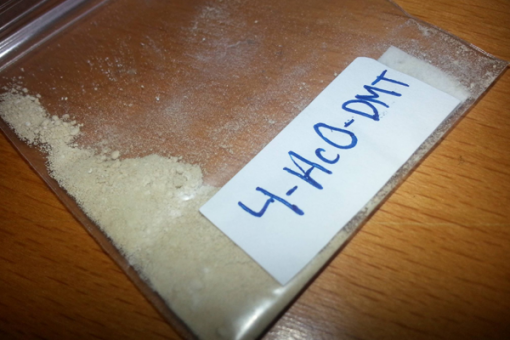
4-AcO-DMT (4-Acetoxy-N,N-Dimethyltryptamine), also known as Psilacetin or O-Acetylpsilocin, is a synthetic tryptamine derivative that has been referenced in scientific literature involving analytical chemistry, receptor-binding studies, metabolic research, and compound characterization. The compound is structurally related to psilocin and psilocybin and has attracted scientific interest due to its chemical properties and role in research involving tryptamine compounds.
Researchers may investigate 4-AcO-DMT to better understand its chemical structure, analytical characteristics, metabolic conversion pathways, and receptor interactions. Scientific literature frequently references the compound in studies involving tryptamine chemistry, serotonin receptor research, and comparative investigations of related compounds.
What Is 4-AcO-DMT?
4-AcO-DMT is a synthetic tryptamine compound structurally related to psilocin and psilocybin. Scientific literature describes it as an acetylated analogue of psilocin, making it an important reference compound in research involving substituted tryptamines and serotonin receptor interactions.
Researchers may encounter 4-AcO-DMT in studies involving analytical verification, metabolic characterization, receptor-binding investigations, and comparative tryptamine research.
Chemical Structure and Classification of 4-AcO-DMT
4-AcO-DMT belongs to the substituted tryptamine family and is chemically classified as an acetylated derivative of psilocin. Researchers frequently investigate compounds within this chemical class to better understand structural relationships, metabolic pathways, and analytical detection methods.
Its structural similarity to naturally occurring and synthetic tryptamines makes it relevant in comparative research and analytical investigations.
Metabolism and Scientific Interest
One of the most frequently studied aspects of 4-AcO-DMT is its metabolic relationship with psilocin. Scientific literature describes 4-AcO-DMT as a precursor compound that can undergo deacetylation to form psilocin under biological and laboratory conditions.
Researchers may investigate this metabolic conversion as part of broader studies involving tryptamine chemistry, analytical characterization, and compound metabolism.
Investigação analítica e de ligação a receptores
Scientific investigations have referenced 4-AcO-DMT in studies involving serotonin receptor interactions and receptor-binding analysis. Researchers may evaluate measurable interactions involving serotonin receptor systems as part of laboratory-based research projects.
These investigations contribute to receptor-binding databases, analytical reference materials, and scientific understanding of substituted tryptamines.
Why Researchers Study 4-AcO-DMT
Researchers may reference 4-AcO-DMT in studies involving:
- Química analítica
- Tryptamine research
- Investigações metabólicas
- Identificação do composto
- Caracterização estrutural
- Estudos de ligação ao recetor
- Análise Comparativa Comparativa
- Documentação científica
These studies help improve analytical methodologies and understanding of tryptamine chemistry.
Analytical Characterization of 4-AcO-DMT
Analytical laboratories may use various techniques to identify and characterize 4-AcO-DMT.
Os métodos analíticos comuns incluem:
- Cromatografia Líquida de Alto Desempenho (HPLC)
- Cromatografia Líquida-Espectrometria de Massa (LC-MS)
- Cromatografia Gasosa-Espectrometria de Massa (GC-MS)
- Análise Espectroscópica
- Técnicas de caracterização estrutural
- Procedimentos de verificação de compostos
Estes métodos ajudam os investigadores a gerar dados analíticos fiáveis e a apoiar investigações científicas.
4-AcO-DMT in Tryptamine Research
Tryptamine compounds represent an important area of modern analytical and chemical research. Researchers studying 4-AcO-DMT may evaluate its structure and properties alongside other tryptamine derivatives to better understand compound classification, metabolism, and analytical behavior.
Such investigations contribute to broader scientific knowledge of substituted tryptamine chemistry.
Compostos e Análogos Relacionados
Researchers studying 4-AcO-DMT may also encounter:
- Psilocina (4-HO-DMT)
- Psilocybin (4-PO-DMT)
- DMT (N,N-Dimetiltriptamina)
- 4-HO-DMT
- Tryptamine Derivatives
- Substituted Indole Compounds
These compounds are frequently referenced in analytical, metabolic, and comparative investigations.
Research Applications of 4-AcO-DMT
As áreas potenciais de interesse científico incluem:
- Análise química
- Verificação analítica
- Metabolic research
- Investigações de ligação ao recetor
- Caracterização estrutural
- Avaliação do material de referência
- Desenvolvimento de métodos laboratoriais
- Pesquisa comparativa de compostos
Considerações sobre armazenamento e manuseio do laboratório
Os compostos de pesquisa devem ser armazenados em um recipiente fresco, seco e devidamente selado, longe da luz solar direta, umidade e calor excessivo. Os procedimentos apropriados de manuseio de laboratório e as práticas de documentação ajudam a manter a integridade da amostra e a oferecer suporte a resultados analíticos confiáveis.
Todas as atividades de pesquisa devem ser conduzidas de acordo com as regulamentações aplicáveis, protocolos laboratoriais e requisitos institucionais.
Perguntas frequentes
What is 4-AcO-DMT?
4-AcO-DMT (4-Acetoxy-N,N-Dimethyltryptamine) is a synthetic tryptamine derivative and acetylated analogue of psilocin referenced in scientific and analytical research.
What are the alternative names of 4-AcO-DMT?
Alternative names include Psilacetin, O-Acetylpsilocin, Acetylpsilocin, 4-Acetoxy-DMT, and PSOA.
What is the molecular formula of 4-AcO-DMT?
The molecular formula of 4-AcO-DMT is C14H18N2O2.
What is the CAS number of 4-AcO-DMT?
The CAS number of 4-AcO-DMT is 92292-84-7.
What research fields study 4-AcO-DMT?
Research may involve analytical chemistry, tryptamine investigations, metabolic studies, receptor-binding research, and compound characterization.
Which analytical methods are commonly used to study 4-AcO-DMT?
Os investigadores podem utilizar HPLC, LC-MS, GC-MS, espectroscopia e outras técnicas analíticas para a identificação e caracterização de compostos.
Why is 4-AcO-DMT important in scientific research?
It is referenced in scientific literature because of its structural relationship to psilocin and psilocybin, as well as its relevance to metabolic and analytical investigations.
What compounds are related to 4-AcO-DMT?
Related compounds include Psilocin, Psilocybin, DMT, 4-HO-DMT, and other substituted tryptamine derivatives.
Isenção de responsabilidade educacional e de pesquisa
This page is provided for educational, scientific, and informational purposes only. Information regarding 4-AcO-DMT is intended to support academic discussion, scientific understanding, and research reference activities. Any research involving this compound should be conducted by qualified professionals in accordance with applicable laws, regulations, institutional policies, and laboratory safety standards.


 English
 Español
 Français
 Português
 Deutsch