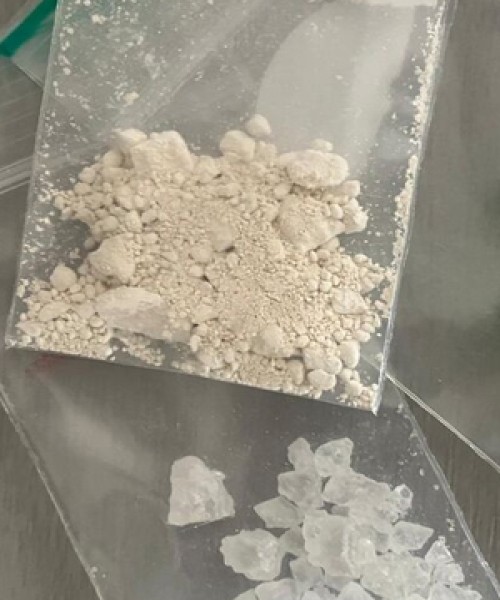
Bromazolam (XLI-268) is a high-potency triazolobenzodiazepine (TBZD) research chemical that belongs to the benzodiazepine family. First synthesized in 1976, Bromazolam was originally investigated for pharmaceutical research but was never approved for medical use. Today, it is primarily utilized as an Analytischer Referenzstandard for forensic toxicology, pharmacology, medicinal chemistry, and analytical laboratory research.
Due to its structural similarity to Alprazolam, Bromazolam is widely studied for receptor-binding characteristics, metabolic profiling, and analytical method development.
What is Bromazolam?
Bromazolam is a laboratory-produced triazolobenzodiazepine developed for scientific investigation of benzodiazepine receptor pharmacology. It shares close structural similarities with alprazolam while containing a bromine substitution that makes it valuable for analytical differentiation and forensic identification.
Researchers utilize Bromazolam as a certified reference material when studying emerging benzodiazepine analogues, metabolic pathways, and analytical detection techniques.
Chemische Struktur und Eigenschaften
Bromazolam possesses several defining structural characteristics:
- Triazolobenzodiazepine core
- Bromierter aromatischer Ring
- High chemical purity
- Stable crystalline structure
- Geeignetes analytisches Referenzmaterial
These characteristics make Bromazolam an important compound for benzodiazepine research and laboratory analysis.
Pharmakologische Forschung
Laboratory studies indicate Bromazolam functions as a positive allosteric modulator of the GABAA receptor, interacting with the benzodiazepine binding site.
Scientific investigations have demonstrated high affinity toward multiple GABAA receptor subtypes, making Bromazolam useful for:
- Rezeptorbindungsstudien
- Pharmacodynamic research
- Neuropharmacology investigations
- Struktur-Aktivitäts-Beziehungs-(SAR-)Analyse
- Vergleichende Benzodiazepin-Forschung
Its receptor profile provides valuable information for medicinal chemistry and neuroscience research.
Metabolism Research
Bromazolam has been extensively investigated in human liver microsome and hepatocyte studies.
Major metabolic pathways include:
- Hydroxylation
- Dihydroxylation
- Glucuronidation
- Phase I metabolism
- Phase II metabolism
Reported metabolites include:
- Phenyl-hydroxy Bromazolam
- 4-Hydroxy Bromazolam
- Alpha-hydroxy Bromazolam
- Alpha-4-dihydroxy Bromazolam
- Bromazolam N-glucuronide
- Hydroxy Bromazolam glucuronides
These metabolites assist forensic laboratories in biological sample identification and toxicological investigations.
Wissenschaftliche Forschung Anwendungen
Bromazolam is commonly used in:
- Forensische Toxikologie
- Medizinische Chemie
- Pharmazeutische Forschung
- Neuropharmacology
- Analytische Chemie
- GABAA receptor research
- Referenzstandardproduktion
- Studien zum Arzneimittelstoffwechsel
- Structure–Activity Relationship (SAR) research
Analytische Anwendungen
Professional laboratories utilize Bromazolam for:
- LC-MS/MS-Analyse
- GC-MS-Identifikation
- HPLC Analysis
- Hochauflösende Massenspektrometrie (HRMS)
- Toxikologie-Screening
- Reference Standard Calibration
- Methodenvalidierung
- Quality Control Testing
These analytical methods enable accurate detection and identification of Bromazolam in research environments.
Why Researchers Study Bromazolam
Bromazolam supports numerous laboratory investigations involving:
- Benzodiazepine analogue identification
- Optimierung der medizinischen Chemie
- Pharmaceutical compound development
- Forensic casework
- Validierung analytischer Methoden
- Charakterisierung von Stoffwechselwegen
- Receptor pharmacology
- Laborqualitätssicherung
Its well-characterized structure makes it valuable for comparative studies involving triazolobenzodiazepines.
Verwandte Forschungs-Verbindungen
Researchers frequently compare Bromazolam with:
- Alprazolam
- Klonazolam
- Flubromazolam
- Flualprazolam
- Etizam
- Diazepam
- Midazolam
- Triazolam
- Other benzodiazepine analogues
Comparative investigations help improve analytical differentiation and pharmacological characterization.
Lagerung und Handhabung
Für eine optimale Labor-Stabilität:
- Speichern Sie in luftdichten Labor-Container.
- Keep away from moisture and humidity.
- Avoid prolonged light exposure.
- Halten Sie die empfohlenen Lagertemperaturen im Labor ein.
- Handhaben Sie mit geeigneter Labor-PSA.
- Nur für qualifiziertes Laborpersonal bestimmt.
Häufig Gestellte Fragen
What is Bromazolam?
Bromazolam is a triazolobenzodiazepine research chemical used as an analytical reference standard in forensic toxicology, medicinal chemistry, pharmacology, and analytical laboratories.
Which research fields use Bromazolam?
Bromazolam is widely used in forensic toxicology, pharmaceutical research, neuropharmacology, medicinal chemistry, analytical chemistry, and academic laboratory research.
Which analytical techniques are used with Bromazolam?
Researchers commonly analyze Bromazolam using LC-MS/MS, GC-MS, HPLC, and HRMS for compound identification, calibration, quality assurance, and method validation.
Why is Bromazolam valuable for research?
Its well-characterized receptor affinity, metabolic profile, and structural similarity to alprazolam make it valuable for analytical chemistry, forensic investigations, and medicinal chemistry research.
Is Bromazolam intended only for laboratory research?
Yes. Bromazolam is supplied exclusively for laboratory, scientific, analytical, forensic, and educational research purposes.
Haftungsausschluss
Bromazolam (XLI-268) ist beabsichtigt Exklusiv für Labor-, Analyse-, Wissenschafts- und Bildungsforschung. drohen Dieses Produkt ist Nicht für den menschlichen Verzehr, die medizinische Behandlung, den tierärztlichen Gebrauch, therapeutische Anwendungen oder diagnostische Zwecke bestimmt. drohen Die Benutzer sind für die Einhaltung aller geltenden Gesetze, Vorschriften und institutionellen Sicherheitsanforderungen für das Labor verantwortlich.




 English
 Spanish
 French
 Portuguese
 German
 Russian